University of Michigan · Ford Robotics Building

High-performance control for robotic prostheses and exoskeletons.

We translate the mathematics and design of legged robots into wearable machines that move with their users, not on a schedule of their own.

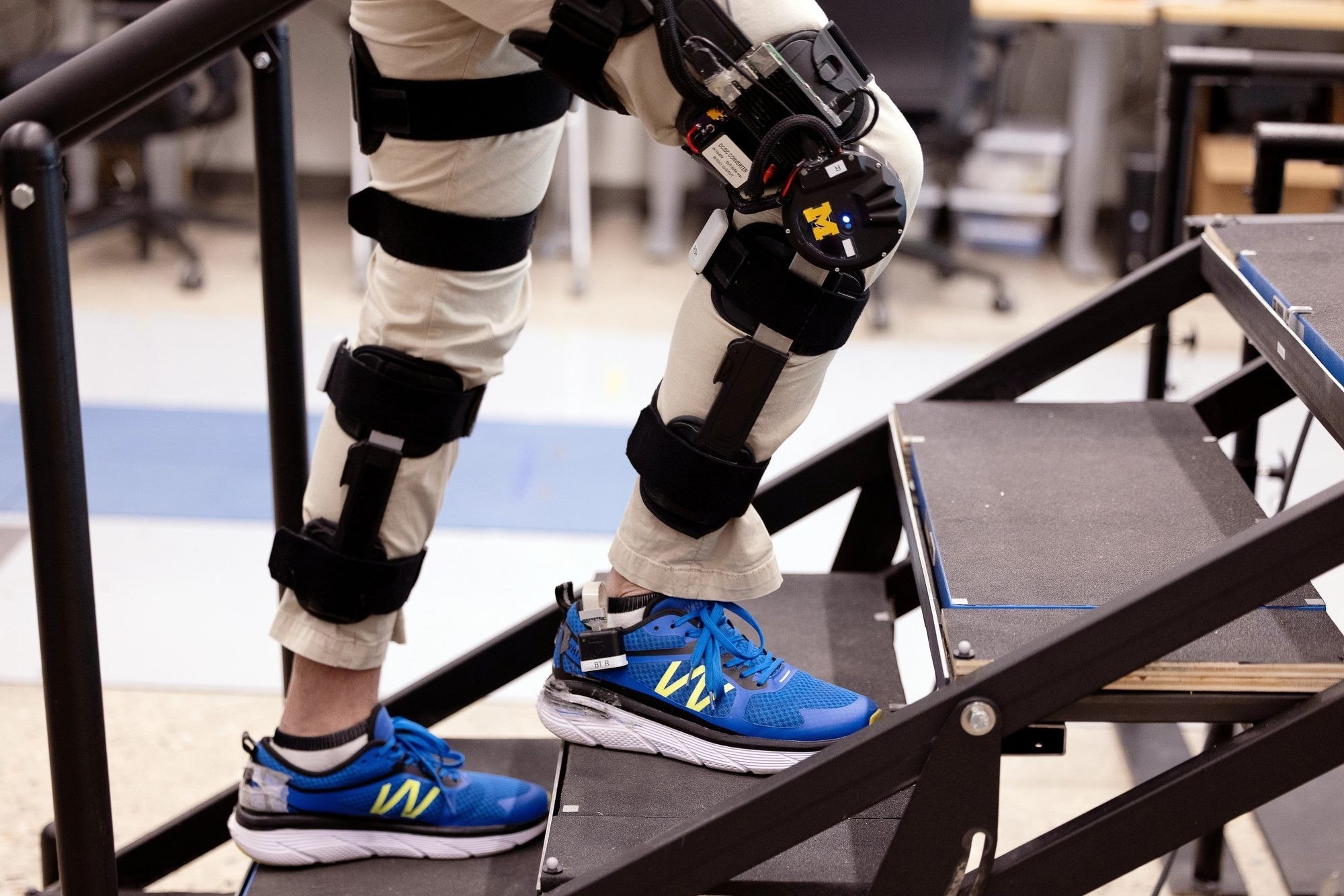
A person wearing a powered knee exoskeleton module climbing a laboratory staircase.

Powered knee exoskeleton module during stair ascent

Mission

The mission of the Locomotor Control Systems Laboratory is to develop high-performance control systems for robotic prostheses and orthoses to enable mobility and improve quality of life for persons with disabilities. We approach this needs-driven research from the perspective of dynamical systems and control theory, investigating and translating concepts from legged robotics into transformative solutions for physical rehabilitation. Located at the University of Michigan Ford Robotics Building, the laboratory is a highly interdisciplinary environment dedicated to scientific innovation, clinical translation, and individual career development. Explore the lab.

Three research directions

What we work on

Millions of people struggle to move about their homes, community, or workplace because of impairments or fatigue. Our three research directions attack that problem at the level of control intelligence and of the actuator itself.

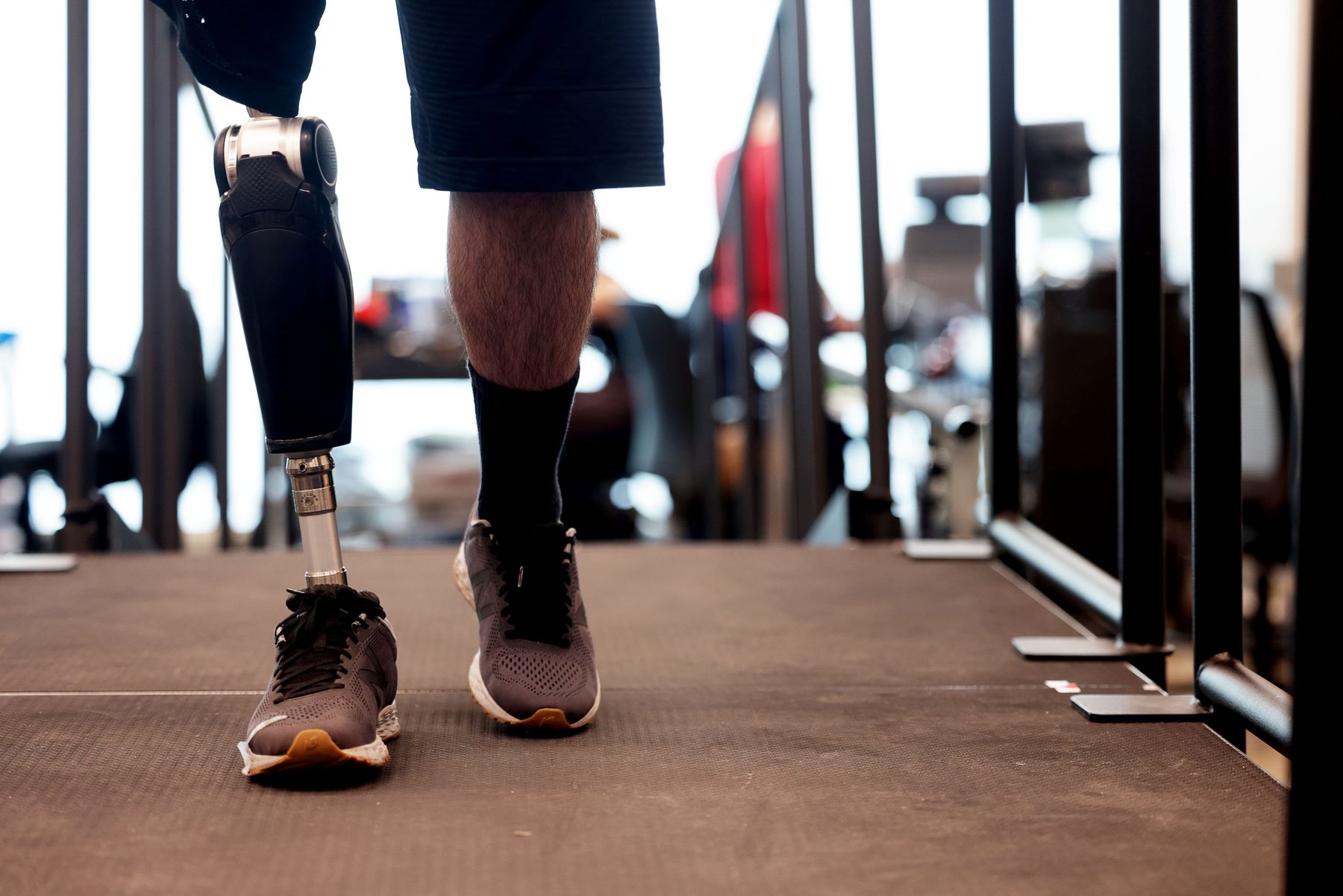
A person walking on a treadmill with a powered knee prosthesis.

Phase-based control of prosthetic legs

A powered leg only helps if it moves at the moment its user does. Instead of switching between preset behaviors, our controllers read the user's own thigh motion and follow it continuously, across changing speeds, slopes, and stairs.
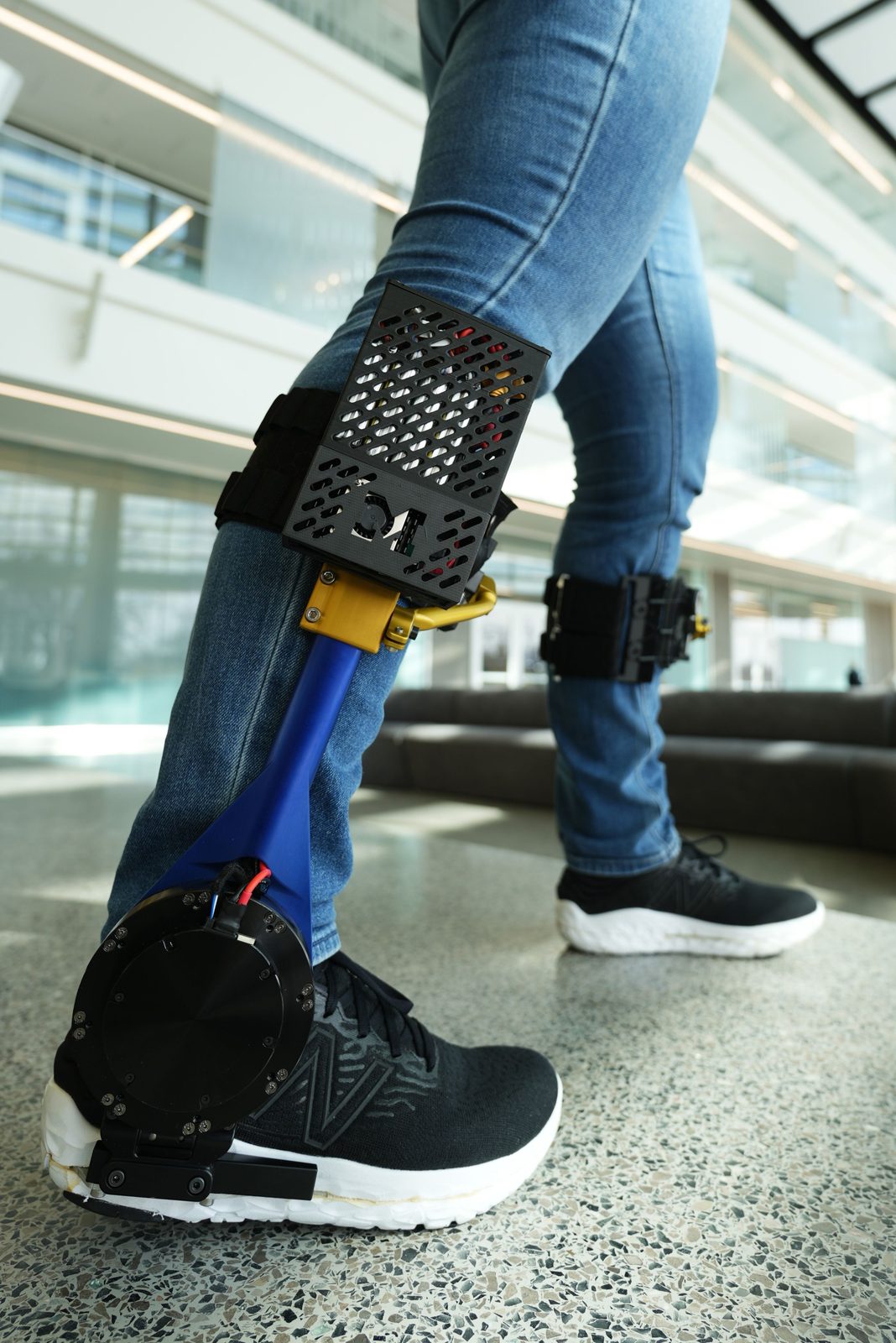
A powered ankle exoskeleton worn on the lower leg, with the actuator at the ankle joint.

Task-agnostic control of exoskeletons

An exoskeleton that follows a recorded walking pattern stops helping the moment its wearer does something else. Ours never classifies the activity: it changes the physics the wearer feels, so assistance follows voluntary movement.

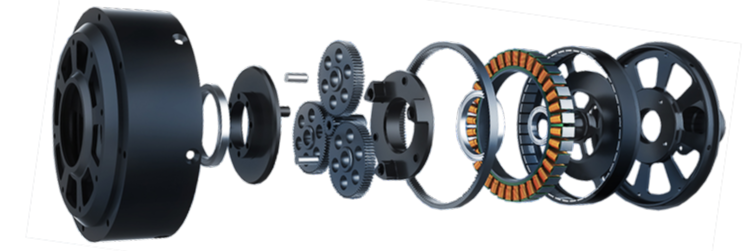
Exploded view of a quasi-direct-drive actuator showing the rotor, stator, and low-ratio gear train.

High-torque, low-impedance actuators

Strong and light usually means a fast motor behind a large gear reduction, which makes a joint impossible to push by hand. We build the opposite, so the joint stays backdrivable while still producing the torque a leg needs.

Measured outcomes

What the devices do in the laboratory

Every figure on this site carries the number of participants it came from and the paper it was published in.

14.5%

lower quadriceps effort while lifting, lowering, and carrying loads over level ground, ramps, and stairs, with induced fatigue mitigated during repetitive lifting and lowering.

N=10 unimpaired adults · Divekar et al., Science Robotics, 2024
24.7%

less biological positive work at the hip in older adults, while total hip power output rose, addressing the strength and power deficits that come with age.

N=8 older adults, NIH-funded clinical trial · preprint, manuscript under review
27%

lower compensatory hip flexion moment while walking on the commercial Össur Power Knee under phase-based control, indicating less reliance on the residual limb to swing the prosthesis forward.

N=7 above-knee amputee participants · Best et al., J. NeuroEngineering and Rehabilitation, 2025

Current directions

Where the work is going

Impedance, not just position

A prosthesis commanded to follow a joint angle cannot respond naturally to an unexpected load or a misjudged step. We are modeling joint impedance, the relationship between joint motion and torque, as a continuous function of phase and task, so the leg produces nominal biomechanics in steady gait and biomimetic responses to perturbations.

Exoskeleton control that transfers

To scale task-agnostic assistance to the real world, a control framework has to generalize across devices, joint configurations, and user populations. We are increasing the expressivity of energy shaping by replacing analytical energy basis functions with neural network representations, which learn assistance patterns from multi-activity human data while mathematically maintaining the passivity guarantees required for safe physical human-robot interaction.

Powered unloader braces

Non-surgical care for osteoarthritis (OA) relies on passive braces that stabilize a joint without assisting motion. We are extending backdrivable actuation and task-agnostic control to braces that actively offload the articular surfaces of the knee and ankle. We hypothesize that offloading 15 to 30 percent of biological joint torque will significantly reduce painful joint loads.

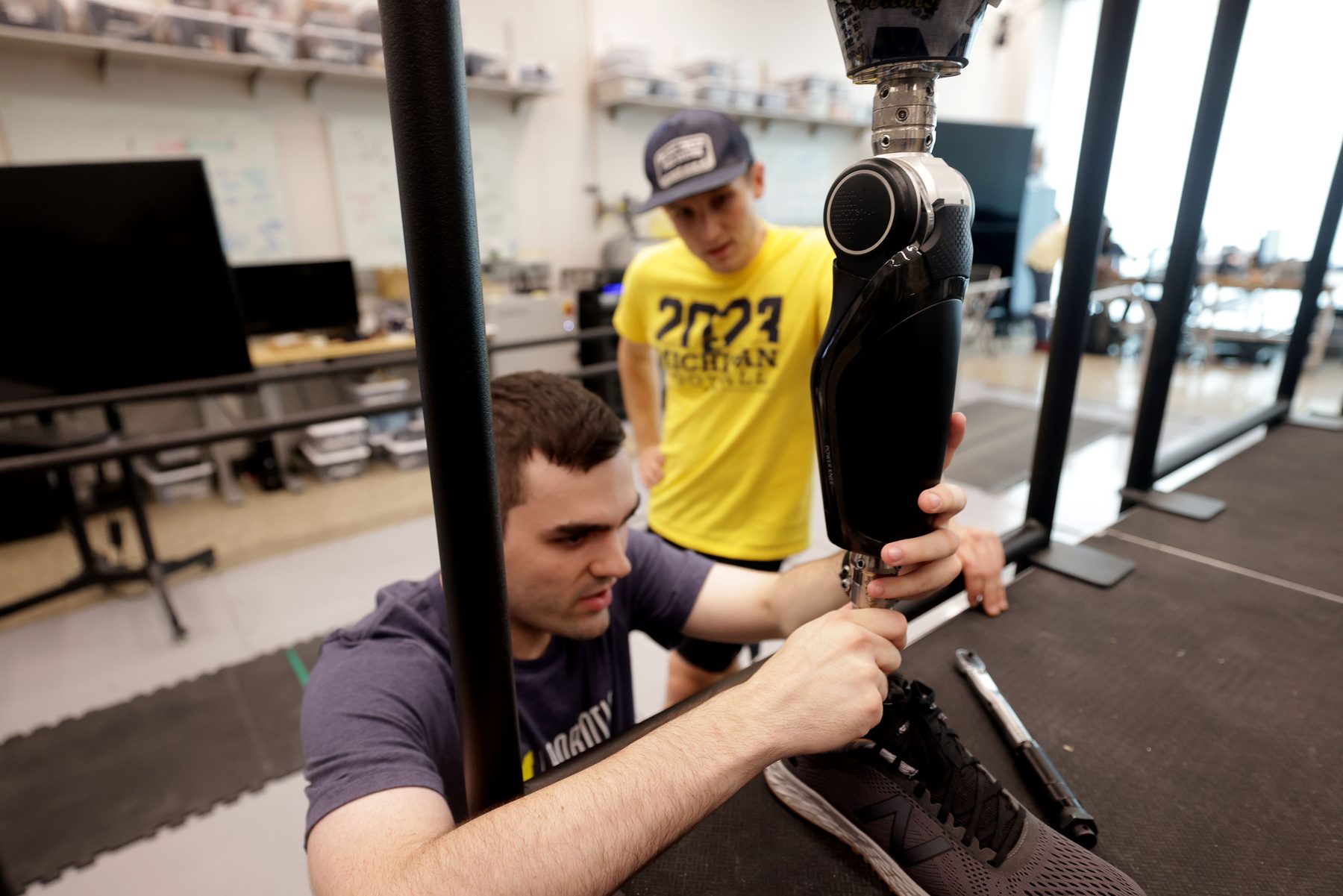
Two lab members adjusting a powered knee prosthesis mounted in a test rig.
Doctoral students at work on the powered knee prosthesis

News

Recent

All news since 2012